 Bridging the Gap Between Grid Physics and Policymaking at Energy Forum 2026.
 Stara Zagora, June 13, 2026. Discussion forum of power system academics, legal experts, and energy committee policymakers.
I had the privilege of representing our Civil Initiative alongside a distinguished panel of experts.
One of the most encouraging outcomes of the forum was that the discussion moved beyond the traditional "coal versus renewables" narrative. The real challenge facing Europe is not choosing one technology over another. The challenge is maintaining grid stability while integrating new technologies at unprecedented speed. This is precisely why concepts such as synchronous inertia, voltage control, dispatchable generation, and large flexible loads are becoming central to the European energy debate.
Relying blindly on uncoordinated solar expansion without maintaining traditional rotating buffers is already causing severe systemic fragility across Southeast Europe. The June 2026 ENTSO-E strategy paper confirms that grid resilience is becoming a strategic priority across Europe. Southeast Europe should not be viewed as a peripheral region, but as a critical component of the future European energy architecture.
Key outcomes and expert consensus achieved by the end of the forum:
 Repurposing Legacy Hubs: Strong consensus that the Maritsa-East infrastructure must be recognized under the EU TEN-E framework as a Strategic Energy Node for non-frequency ancillary services (synchronous inertia and voltage control). Demand-Side Flexibility: Shifting the strategy toward maintaining low, stable baseline energy prices to attract global tech giants for large-scale AI Data Center deployments right at the node. Institutional Commitment: Members of the Parliamentary Energy Committee publicly committed to initiating a formal grid stability assessment through the National Transmission System Operator (TSO) based on our engineering proposal.
Science and physical reality must dictate market design, not the other way around. Real structural security requires long-term asset integration and trans-European connectivity.
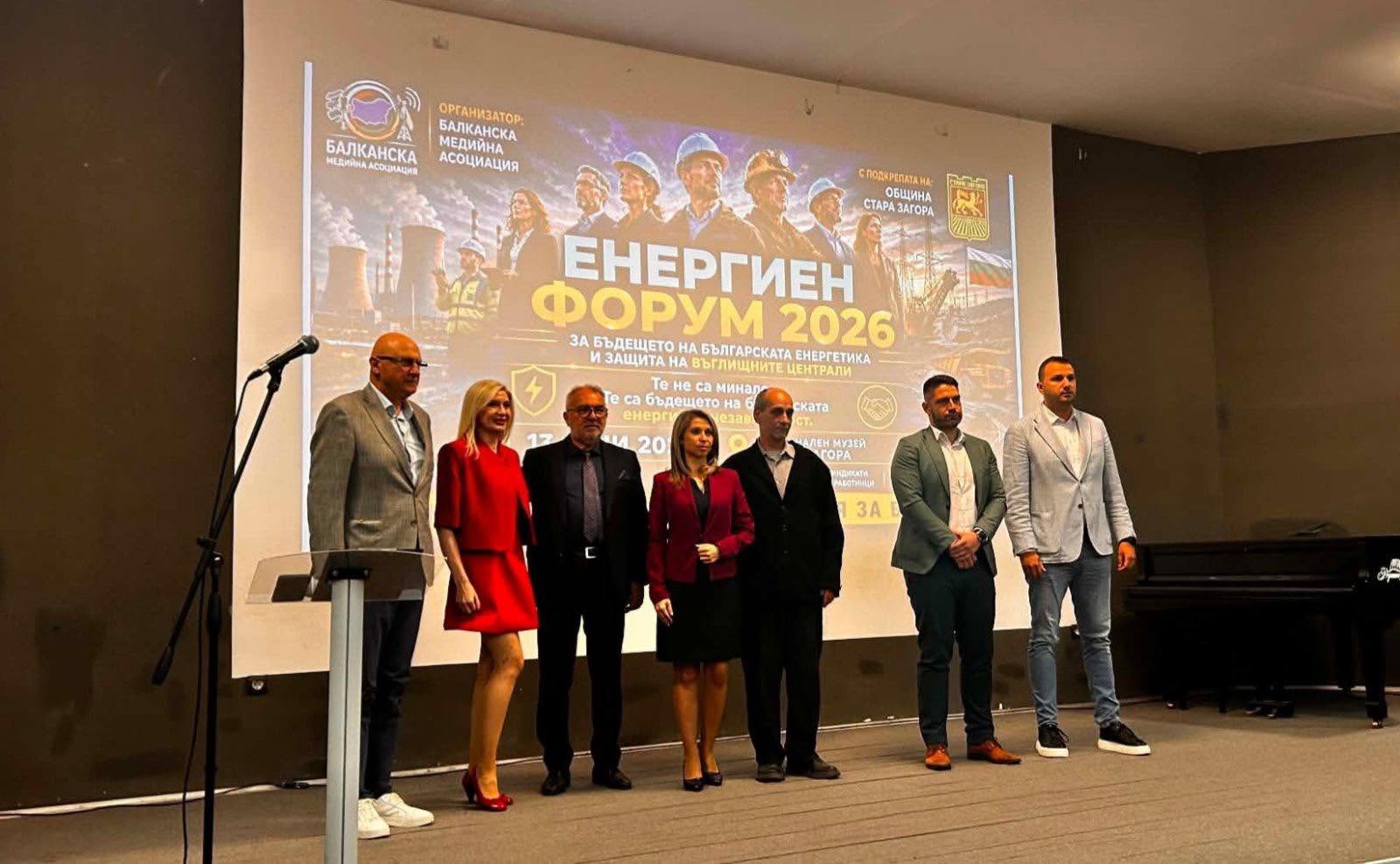
 Pictured, the concluding panel of key speakers and experts who remained for the transparent debate:
Prof. Valentin Kolev – Chairman of BBCE, Dean of the Faculty of Electrical Engineering at TU-Sofia
Nina Hamilton – Forum Moderator
Plamen Pavlov – Chairman of the Bulgarian Gas Association, Board Member of BCCI
Iskra Mihaylova – Member of Parliament, Member of the Parliamentary Energy Committee
Svetoslav Projnov – Coordinator of the Civil Initiative "Protection of Maritsa-East"
Atty. Nikolay Hadzhiyski – Energy & Blockchain Legal Specialist
Dr. Daniel Parushev – Member of Parliament, Member of the Committee on Economic Policy and Innovation
published in:
Power/ Energy/ Infrastructure Sector Professionals
https://www.linkedin.com/feed/update/ur ... 550033920/